
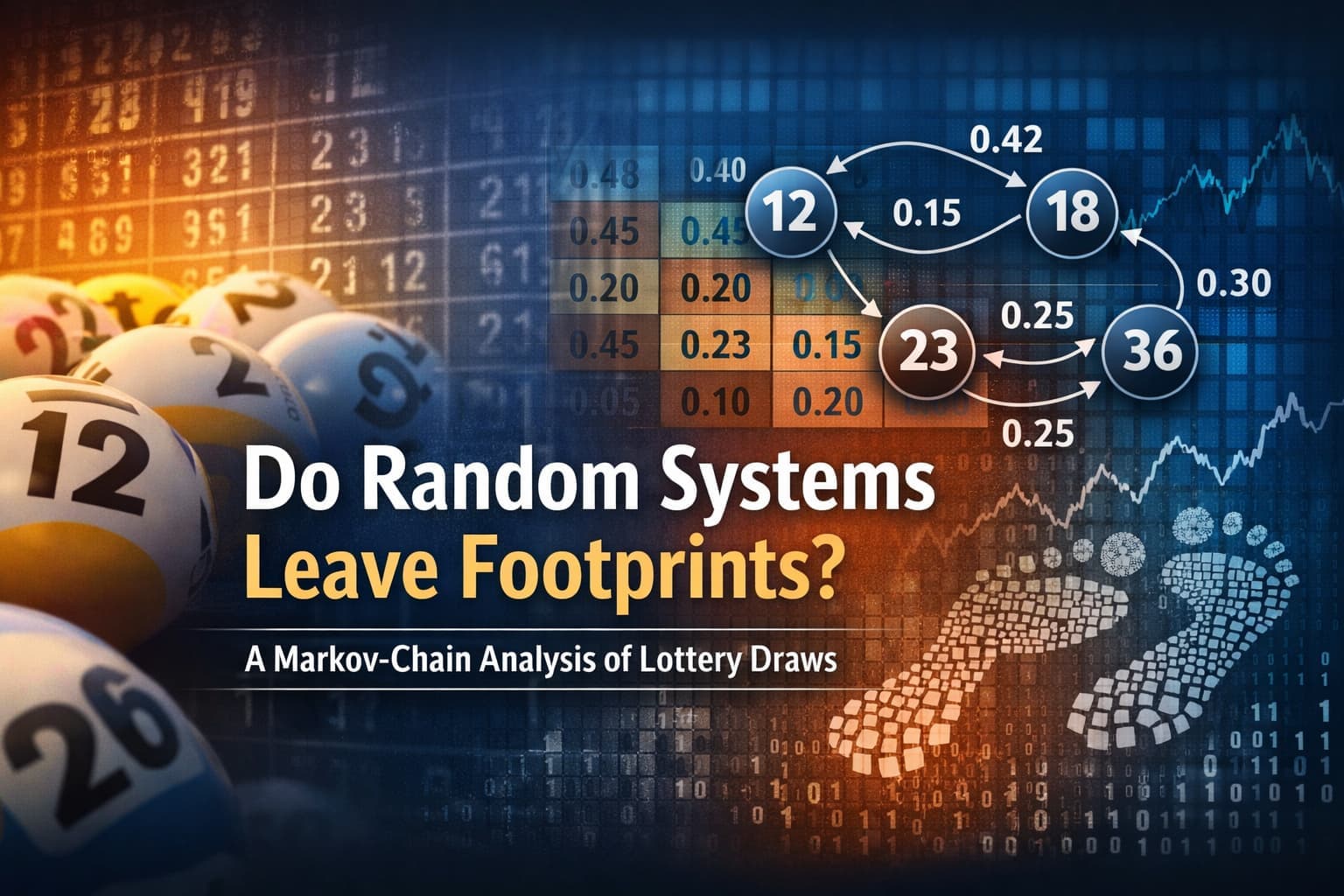
Efterlader tilfældige systemer spor? En Markov-kædeanalyse af lotteritrækninger
Af Chronos Team • 30. jan 2026 • 6 min læsning
Lotterier er designet til at være tilfældige. Hver trækning skal være uafhængig, uden hukommelse og uforudsigelig. Alligevel, når store historiske datasæt analyseres, fremstår der ofte statistisk struktur, hvor intuitionen ikke forventer nogen.
I denne artikel udforsker vi, hvordan Markov-kæder kan anvendes på historiske lotteritrækninger—ikke for at forudsige fremtidige resultater, men for at identificere og visualisere strukturelle afhængigheder, der dukker op i eftertiden.
Markov-kæder og lotteridata
En Markov-kæde er en matematisk model, der beskriver systemer, der overgår fra en tilstand til en anden baseret på faste sandsynligheder. Den centrale antagelse er hukommelse: den næste tilstand afhænger kun af den nuværende tilstand, ikke af hele fortiden.
Når det anvendes på lotteridata, rejser dette et umiddelbart spørgsmål:
Hvis lotteritrækninger er uafhængige, hvorfor optræder der så nogle gange ikke-uniforme overgangsmønstre overhovedet?
Flere faktorer bidrager:
- Begrænsede prøver: Virkelige datasæt er begrænsede. Selv virkelig tilfældige processer kan vise ujævne overgange, når de observeres over begrænsede horisonter.
- Tilstandsdefinitioner: Hvordan tilstande konstrueres (enkelt numre, par, huller, sekvenser) påvirker stærkt den opdagede struktur.
- Post-hoc synlighed: Mønstre er ofte kun synlige efter faktum, ikke prospektivt.
Vigtigt er det, at opdagelig struktur ikke indebærer forudsigelighed. Det indebærer, at tilfældighed, når den observeres historisk, stadig kan efterlade målbare statistiske spor.
Hvad Markov-strategien analyserer
I Chronos forsøger Markov-strategien ikke at “slå” tilfældigheden. I stedet fokuserer den på beskrivende statistisk adfærd på tværs af historiske trækninger.
Specifikt undersøger den:
- Tilstandsovergange: Hvor ofte en trækning konfiguration følger en anden.
- Overgangsasymmetri: Om nogle overgange forekommer hyppigere end uniform tilfældighed ville antyde.
- Stabilitet over tid: Om de opdagede overgangsstrukturer består eller kollapser, når datasættet udvides.
Disse observationer giver brugerne mulighed for at udforske hvordan struktur opstår i historiske data, uden at antage at det vil bestå ind i fremtiden.
Sådan bruger du Markov-strategien i Chronos
For at udforske Markov-baseret analyse i appen:
- Gå til Avanceret Statistik (Laboratoriet).
- Aktiver strategien "Markov-kædeanalyse".
- Juster skyderen for at kontrollere den historiske dybde, der bruges til overgangsberegninger.
Højere værdier øger prøve størrelsen, men kan udjævne kortsigtede uregelmæssigheder. Lavere værdier fremhæver lokal struktur, men øger støj.
Hvad denne strategi kan—og ikke kan—fortælle dig
Hvad den kan gøre:
- Afsløre strukturelle mønstre i historiske træk-sekvenser
- Illustrere hvordan tilfældighed opfører sig i begrænsede prøver
- Understøtte dybere forståelse af statistiske afhængigheder
Hvad den ikke kan gøre:
- Garanti for fremtidige resultater
- Give forudsigelig sikkerhed
- Overtræde den grundlæggende tilfældighed i lotterisystemer
Værdien af denne analyse ligger i indsigt, ikke forudsigelse.
Reproducerbar kode
GitHub udgivelse v1.0.0
Nysgerrig på, hvordan tilfældighed opfører sig, når du ser nærmere på det?
Udforsk Avanceret Statistik
Udforsk Avanceret Statistik
Discover data-driven predictions and strategies
Explore more from EuroLotto Prediction