
How Our First AI Picks Engine Worked
The Origins of AI Picks: How Our First Engine Worked ⚙️
By Chronos Team • Oct 1, 2025 • 6 min read
When we launched the very first version of our ticket generator, our goal was simple but ambitious: create a system fundamentally better than random quick-picks, while keeping the underlying math transparent and easy to understand.
Most lottery tools online simply spit out random numbers or apply one basic, gimmicky rule. We wanted to go further. We wanted to introduce a highly structured, data-driven approach to building ticket sets.
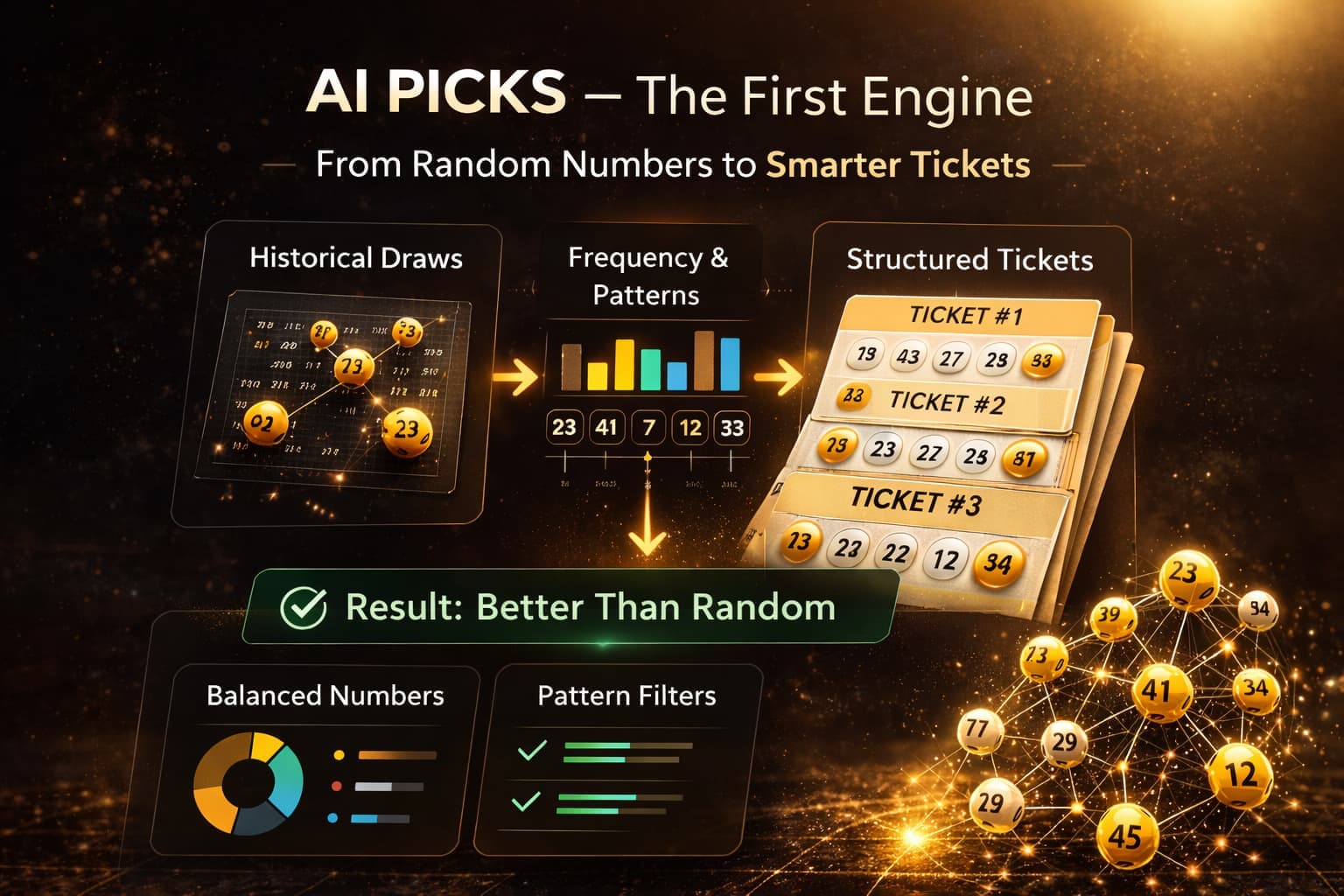
Instead of picking numbers blindly, our first AI Picks engine analyzed thousands of historical Eurojackpot draws to find the signal in the noise. Here is exactly how it worked.
🔍 The Three Pillars of Number Selection
To build a smarter ticket, the initial version of our engine evaluated candidates based on three core concepts:
- 📈 Frequency Signals: Some numbers appear slightly more often in historical draws than others. While this does not guarantee future outcomes, tracking frequency helped the engine identify numbers that were mathematically "active" over long periods.
- 🧩 Pattern Signals: Lottery draws often exhibit recurring behaviors. The engine looked for historical sweet spots in odd vs. even balance, low vs. high distribution, common pair combinations, and specific spacing between numbers.
- ⚖️ Structural Filters: If you generate random numbers, you often get very weak structural sets (e.g., tickets with all low numbers, all odd numbers, or highly unrealistic total sums). Our first engine applied strict structural filters to instantly reject these mathematically improbable combinations.
These rules ensured that every ticket generated looked and felt much closer to a real, historically proven draw structure.
🎟️ The Birth of the "Ticket Set" Approach
Even in version one, we knew that lottery tickets should never be viewed individually.
Instead of evaluating a single ticket in a vacuum, the engine was designed to generate multiple tickets that worked together as a cohesive portfolio.
The goal was twofold:
- Reduce dangerous overlap between tickets (so you don't waste money betting on the exact same clusters).
- Cover a wider range of number combinations.
This foundational concept of spreading risk across a structured portfolio laid the exact groundwork for what we now call Coverage Efficiency.
🏗️ What We Learned (And Why We Had to Evolve)
The first generation of the AI engine was a massive success. It helped thousands of users stop playing blind and start generating highly structured, logical tickets.
However, as more users experimented with the system, we relentlessly analyzed the data and saw massive opportunities to improve. We noticed two critical limitations in the V1 architecture:
- Simple Scoring: The generator still relied on relatively rigid, rule-based scoring logic.
- Incomplete Set Optimization: While it built sets, it didn't mathematically optimize the entire 30-ticket matrix all at once.
We realized that to truly give our users the best mathematical advantage possible, we had to stop building tickets one by one, and start simulating millions of combinations at the portfolio level.
That insight led to our biggest breakthrough yet.
Check our new developments
Discover data-driven predictions and strategies