
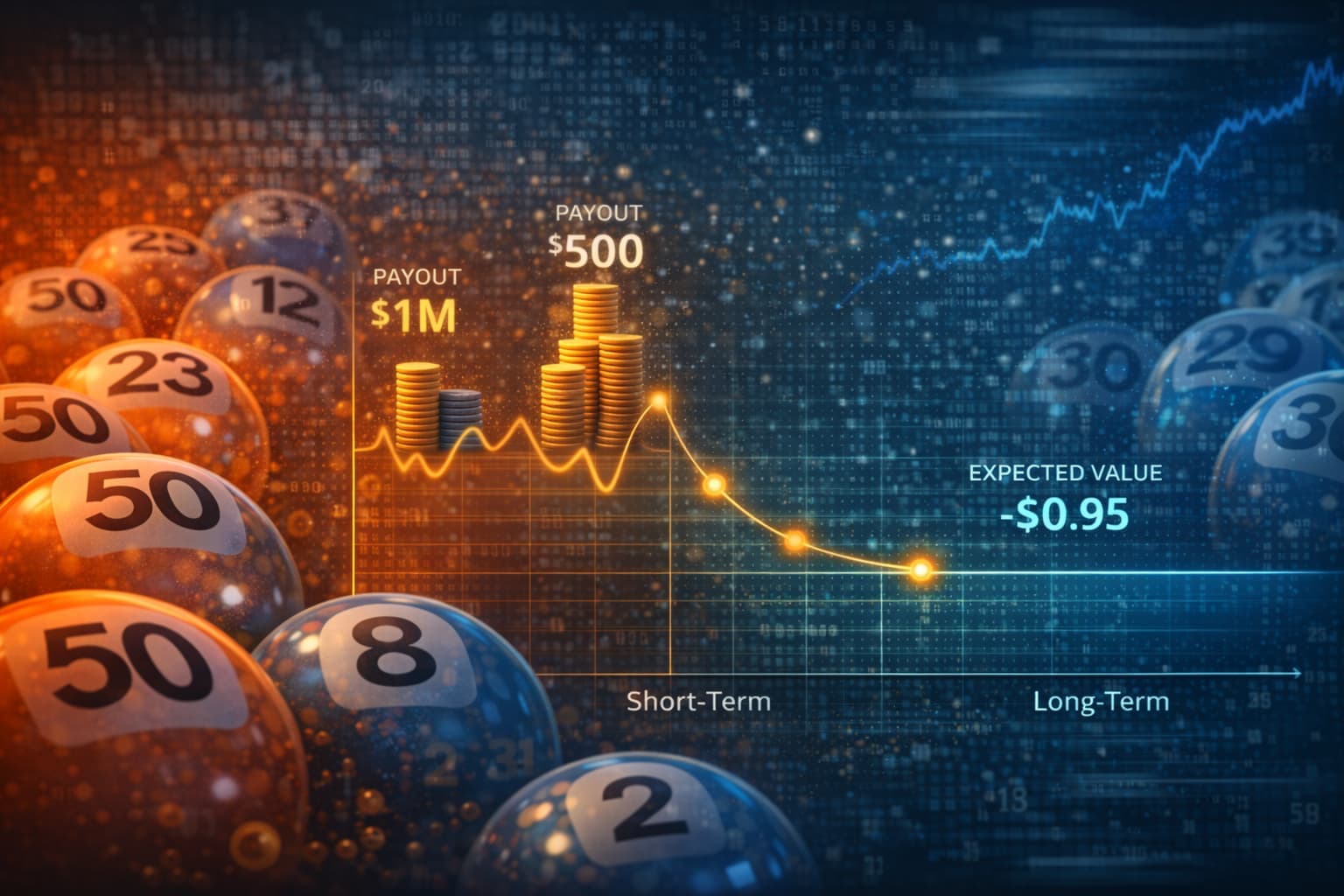
Forventet Værdi Over Tid: Et Praktisk Perspektiv for Lotterispillere
Af Chronos Team • 2. feb 2026 • 7 min læsning
Forventet værdi (EV) er et af de mest diskuterede—og mest misforståede—begreber inden for lotterimatematik.
Mange spillere hører, at den forventede værdi i lotteriet er "negativ" og stopper der. Men EV er ikke et enkelt statisk tal. Det er et langtidsgennemsnit, formet af sandsynlighed, udbetalingsstruktur og hvordan resultater udfolder sig over tid.
Hvad Forventet Værdi Reelt Repræsenterer
Forventet værdi beskriver det gennemsnitlige resultat pr. spil, hvis det samme lotteri blev gentaget uendeligt.
- Det forudsiger ikke individuelle træk
- Det fjerner ikke kortsigtede gevinster
- Det bliver meningsfuldt først i stor skala
I lotterisystemer påvirkes EV af:
- præmiefordeling,
- jackpotstørrelse og rollover,
- billetpris,
- sandsynlighedsstruktur.
EV er derfor ikke kun en egenskab ved en billet—det er en egenskab ved systemet over tid.
Hvorfor Kortsigtede Resultater Ofte Afviger fra EV
I små prøver kan resultaterne se meget anderledes ud end forventningerne:
- gevinster kan klumpe sig uventet,
- tab kan vare længere end intuitionen antyder,
- varians dominerer gennemsnit.
Dette modsiger ikke den forventede værdi.
Det forklarer hvordan den forventede værdi opstår.
Kun når gentagelsen øges, begynder tendensen på lang sigt at gøre sig gældende.
Kan Strategi Påvirke Forventet Værdi?
Ren tilfældighed kan ikke kontrolleres—men hvordan tilfældighed tilgås kan struktureres.
Selvom ingen strategi ændrer de underliggende sandsynligheder i et retfærdigt lotteri, kan analytiske metoder:
- fremhæve udbetalingsineffektivitet,
- evaluere varians og distributionsadfærd,
- analysere rollover-dynamik,
- reducere overlap med almindeligt valgte kombinationer.
Disse tilgange garanterer ikke profit.
De hjælper med at vurdere hvordan reelle resultater følger teoretiske forventninger over tid.
Forventet Værdi som Et Evalueringsværktøj
I stedet for at behandle EV som en dom, behandler Chronos det som en målelinse.
Ved at kombinere:
- Monte Carlo-simulering,
- historisk træk-analyse,
- frekvensadfærd,
- distributionsmodellering,
bliver forventet værdi en måde at sammenligne tilgange på, ikke forudsige resultater.
Hvordan Forventet Værdi Passer Ind i Chronos
Chronos fokuserer på udforskning og evaluering—ikke løfter.
- Gå til Avanceret Statistik (Laboratoriet).
- Aktiver Analyse af Forventet Værdi.
- Simuler langsigtede resultater for forskellige udvælgelsesmetoder.
- Observer hvordan EV stabiliserer sig, når prøve størrelsen øges.
Dette giver mulighed for at udforske et centralt spørgsmål:
Hvordan opfører denne tilgang sig over tusinder eller millioner af simulerede spil?
En Mere Informeret Måde at Engagere Sig med Tilfældighed
Forventet værdi fjerner ikke usikkerhed—det rammer den ind.
Brugt korrekt hjælper EV spillere:
- forstå langsigtede tendenser,
- undgå misvisende kortsigtede konklusioner,
- evaluere strategier med statistisk disciplin.
Vil du udforske, hvordan forventet værdi udfolder sig over tid?
Analyser Forventet Værdi i Laboratoriet
Analyser Forventet Værdi
Discover data-driven predictions and strategies
Explore more from EuroLotto Prediction