
Wariancja a Wartość Oczekiwana: Dlaczego Zmienność Ma Znaczenie w Grze w Lotto
Zespół Chronos • 5 lutego 2026 • 7 min czytania
Wartość oczekiwana wyjaśnia średni wynik loterii w dłuższym okresie —
ale nie wyjaśnia, dlaczego indywidualne doświadczenia mogą być bardzo różne.
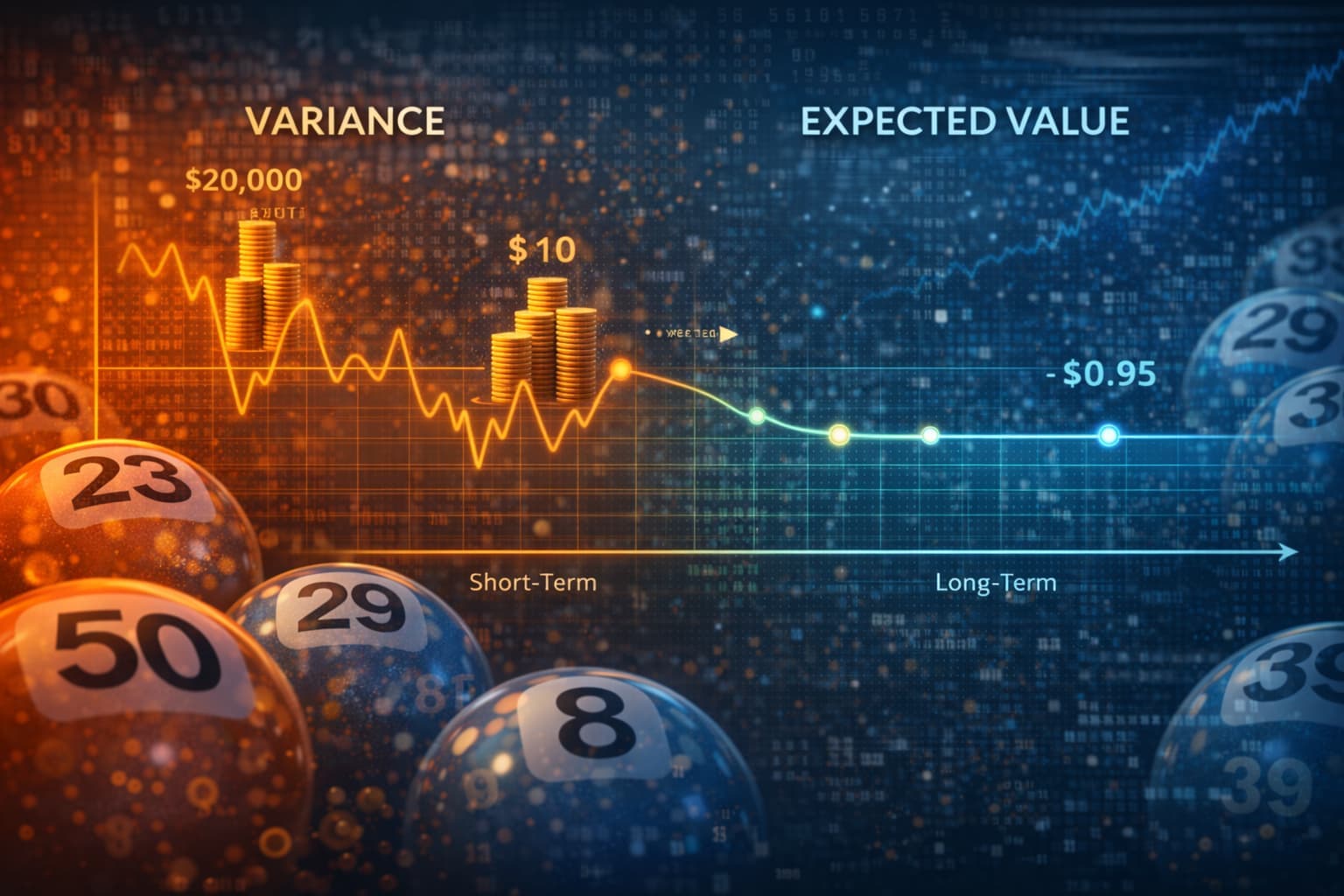
Ta różnica jest napędzana przez wariancję: miarę tego, jak szeroko wyniki waha się wokół wartości oczekiwanej.
Zrozumienie wariancji pomaga wyjaśnić, dlaczego dwóch graczy stosujących tę samą strategię może uzyskać bardzo różne wyniki.
Wartość Oczekiwana a Wariancja: Szybkie Rozróżnienie
Wartość oczekiwana (WO) odpowiada na jedno pytanie:
Co się dzieje średnio w dłuższym okresie?
Wariancja odpowiada na inne:
Jak rozproszone są możliwe wyniki po drodze?
Oba są niezbędne do zrozumienia, jak systemy loteryjne zachowują się w praktyce.
- Wartość oczekiwana opisuje tendencję w dłuższym okresie
- Wariancja opisuje zmienność wokół tej tendencji
System może mieć stabilną wartość oczekiwaną i nadal produkować ekstremalne wyniki w krótkim okresie.
Dlaczego Zmienność Kształtuje Rzeczywiste Doświadczenia
Wyniki loterii są z natury bardzo zmienne.
To oznacza:
- długie serie przegranych są statystycznie normalne
- rzadkie wygrane mogą dominować wyniki w krótkim okresie
- wyniki grupują się nierównomiernie przed wygładzeniem
Wariancja wyjaśnia, dlaczego losowość często wydaje się „niesprawiedliwa” — nawet gdy prawdopodobieństwa są zrównoważone.
Ta Sama Wartość Oczekiwana, Różne Profile Ryzyka
Dwie strategie mogą mieć tę samą wartość oczekiwaną, a jednocześnie zachowywać się bardzo różnie:
- jedna może generować częste małe wyniki,
- druga może generować rzadkie, ale ekstremalne wyniki.
Z matematycznego punktu widzenia, te strategie są równoważne pod względem WO —
ale z perspektywy doświadczenia, nie są.
Wariancja określa:
- emocjonalną zmienność,
- głębokość spadków,
- wrażliwość na serie.
Dlaczego Wariancja Ma Większe Znaczenie, Niż Wiele Osób Sądzi
Skupianie się tylko na wartości oczekiwanej może być mylące.
Bez uwzględnienia wariancji:
- krótkoterminowe straty mogą wydawać się nieoczekiwane,
- dyscyplina staje się trudniejsza do utrzymania,
- strategie mogą być porzucane przedwcześnie.
Wariancja dostarcza brakującego kontekstu dla tego, jak wyniki przychodzą, a nie tylko gdzie konwergują.
Jak Chronos Analizuje Wariancję i WO Razem
Chronos ocenia wartość oczekiwaną w połączeniu ze zmiennością.
- Otwórz Zaawansowane Statystyki (Laboratorium).
- Włącz Analizę Wariancji i Rozkładu.
- Porównaj, jak różne podejścia rozprzestrzeniają wyniki w czasie.
- Obserwuj, jak zmienność wpływa na długoterminowe oczekiwania.
To umożliwia porównanie strategii nie tylko według średniego wyniku —
ale według zachowania w czasie.
Bardziej Kompleksowy Widok Matematyki Loterii
Wartość oczekiwana opisuje kierunek.
Wariancja opisuje podróż.
Używane razem, dostarczają jaśniejszego, bardziej realistycznego obrazu tego, jak zachowują się losowe systemy.
Zrozumienie obu pozwala graczom świadomiej angażować się w dane loteryjne —
z mniejszą ilością niespodzianek i lepiej dopasowanymi oczekiwaniami.
Analizuj Wariancję i WO
Discover data-driven predictions and strategies
Explore more from EuroLotto Prediction