
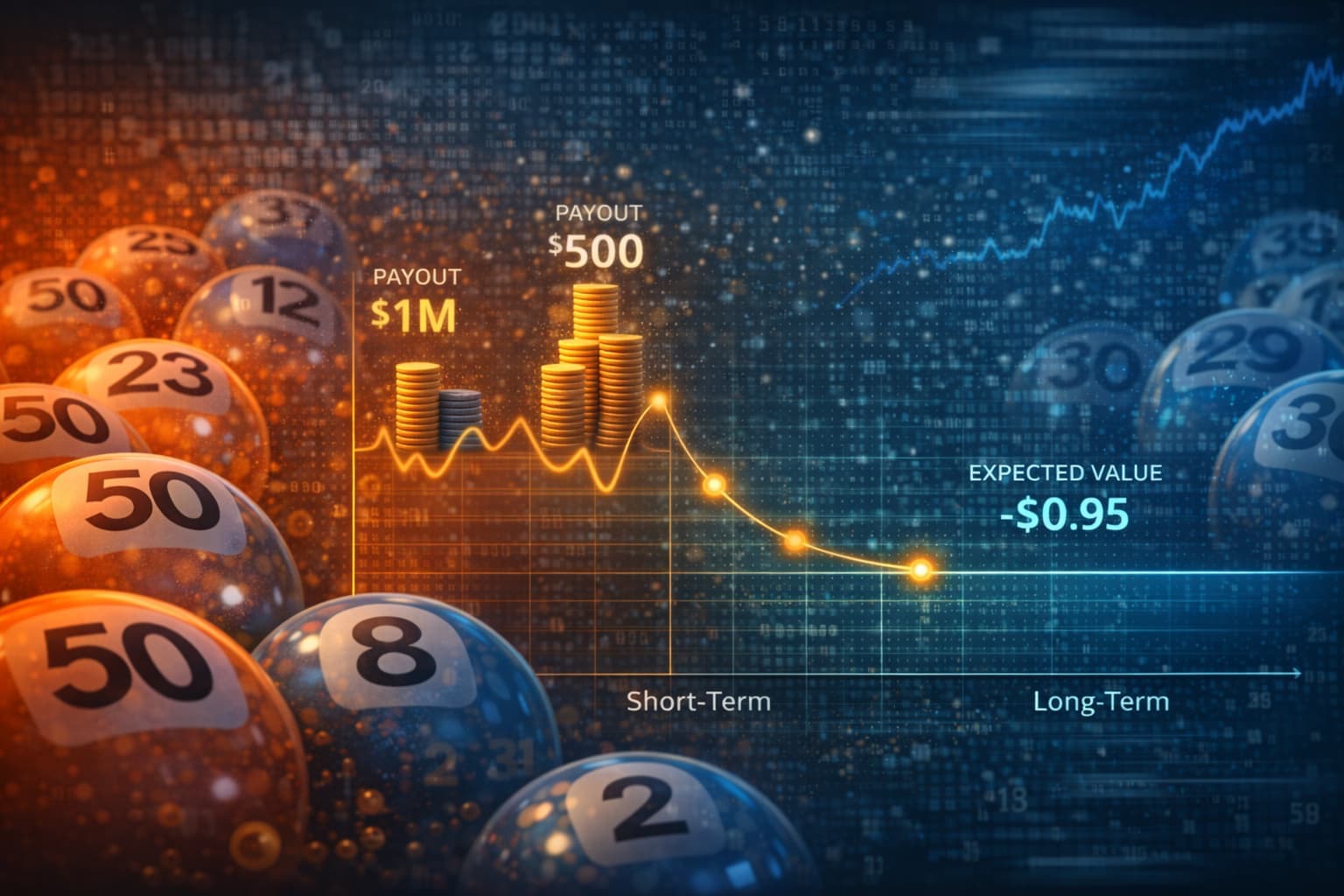
Wartość Oczekiwana w Czasie: Praktyczna Perspektywa dla Graczy Loterii
Zespół Chronos • 2 lutego 2026 • 7 min czytania
Wartość oczekiwana (EV) jest jednym z najczęściej omawianych—i najczęściej źle rozumianych—pojęć w matematyce loteryjnej.
Wielu graczy słyszy, że wartość oczekiwana loterii jest „ujemna” i na tym kończy. Ale EV to nie jest pojedyncza statyczna liczba. To średnia długoterminowa, kształtowana przez prawdopodobieństwo, strukturę wypłat i sposób, w jaki wyniki rozwijają się w czasie.
Co Naprawdę Reprezentuje Wartość Oczekiwana
Wartość oczekiwana opisuje średni wynik na grę, jeśli ta sama loteria byłaby powtarzana w nieskończoność.
- Nie przewiduje pojedynczych losowań
- Nie eliminuje krótkoterminowych wygranych
- Staje się znacząca tylko w skali
W systemach loteryjnych, EV jest wpływana przez:
- dystrybucję nagród,
- wielkość jackpota i rolloverów,
- koszt biletu,
- strukturę prawdopodobieństwa.
EV nie jest więc tylko właściwością biletu—jest właściwością systemu w czasie.
Dlaczego Krótkoterminowe Wyniki Często Odbiegają od EV
W małych próbkach, wyniki mogą wyglądać bardzo różnie od oczekiwań:
- wygrane mogą się nieoczekiwanie grupować,
- straty mogą utrzymywać się dłużej, niż sugeruje intuicja,
- wariancja dominuje nad średnimi.
To nie zaprzecza wartości oczekiwanej.
To wyjaśnia jak powstaje wartość oczekiwana.
Tylko gdy powtórzenia wzrastają, długoterminowa tendencja zaczyna się ujawniać.
Czy Strategia Może Wpłynąć na Wartość Oczekiwaną?
Czysta losowość nie może być kontrolowana—ale sposób podejścia do losowości może być ustrukturyzowany.
Chociaż żadna strategia nie zmienia podstawowych prawdopodobieństw uczciwej loterii, metody analityczne mogą:
- podkreślać nieefektywności wypłat,
- oceniać wariancję i zachowanie dystrybucji,
- analizować dynamikę rolloverów,
- redukować nakładanie się na powszechnie wybierane kombinacje.
Te podejścia nie gwarantują zysku.
Pomagają ocenić jak blisko rzeczywiste wyniki śledzą teoretyczne oczekiwania w czasie.
Wartość Oczekiwana jako Narzędzie Oceny
Zamiast traktować EV jako wyrok, Chronos traktuje ją jako soczewkę pomiarową.
Łącząc:
- symulację Monte Carlo,
- analizę historycznych losowań,
- zachowanie częstotliwości,
- modelowanie dystrybucji,
wartość oczekiwana staje się sposobem na porównanie podejść, a nie przewidywanie wyników.
Jak Wartość Oczekiwana Pasuje do Chronos
Chronos koncentruje się na eksploracji i ocenie—nie na obietnicach.
- Przejdź do Zaawansowane Statystyki (Laboratorium).
- Włącz Analizę Wartości Oczekiwanej.
- Symuluj długoterminowe wyniki dla różnych metod wyboru.
- Obserwuj, jak EV stabilizuje się w miarę zwiększania się wielkości próby.
To pozwala na zadanie jednego kluczowego pytania:
Jak to podejście zachowuje się w przypadku tysięcy lub milionów symulowanych gier?
Bardziej Świadomy Sposób Interakcji z Losowością
Wartość oczekiwana nie usuwa niepewności—ramuje ją.
Używana poprawnie, EV pomaga graczom:
- zrozumieć długoterminowe tendencje,
- unikać mylących krótkoterminowych wniosków,
- oceniać strategie z dyscypliną statystyczną.
Chcesz zbadać, jak wartość oczekiwana rozwija się w czasie?
Analizuj Wartość Oczekiwaną w Laboratorium
Analizuj Wartość Oczekiwaną
Discover data-driven predictions and strategies
Explore more from EuroLotto Prediction