
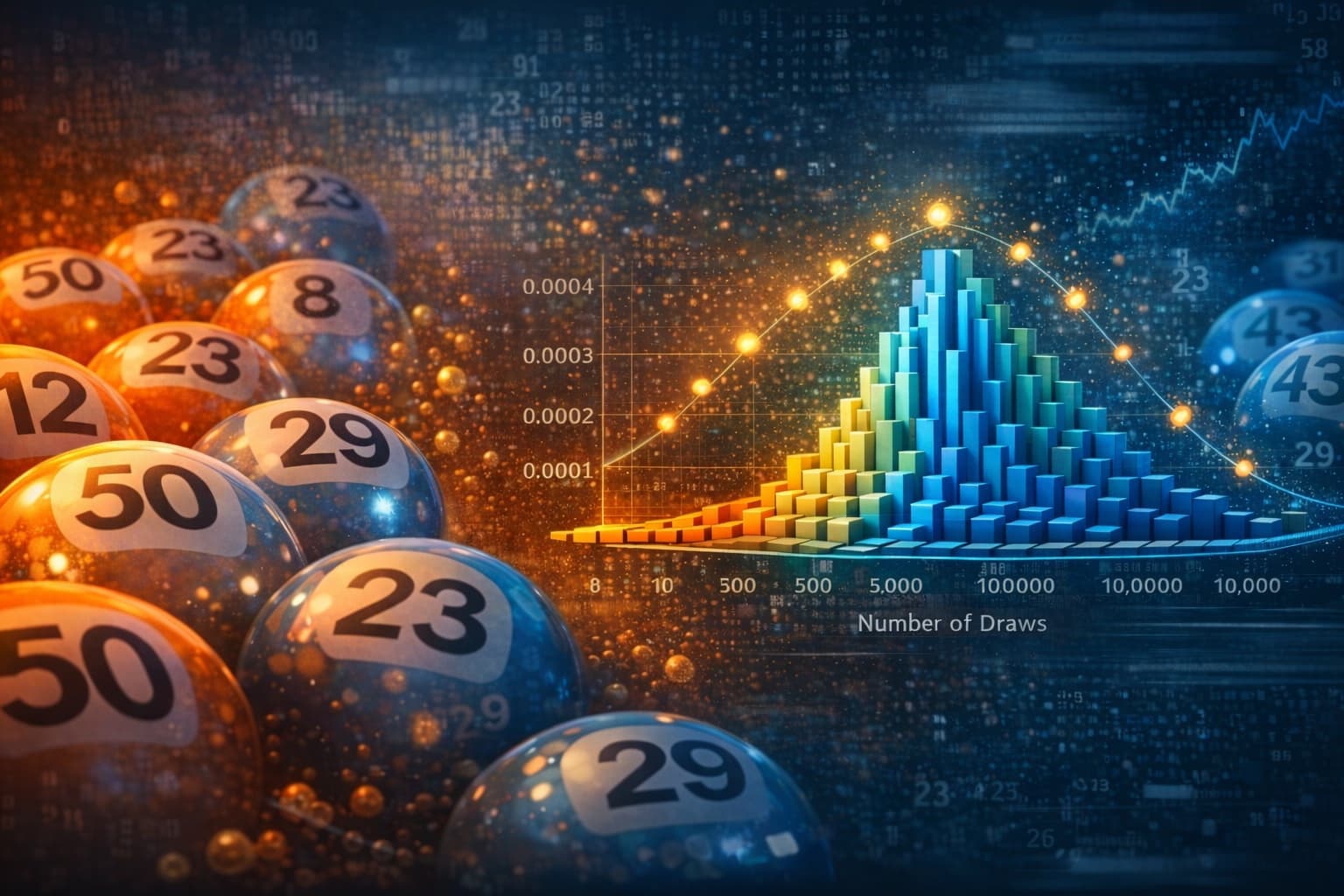
Arpajaisnumeroiden Taajuus: Miten Kaaviot Emerge Satunnaisissa Järjestelmissä
Kirjoittanut Chronos-tiimi • 30. tammikuuta 2026 • 6 min lukuaika
Jos arpajaisarvonnat ovat satunnaisia, miksi jotkut numerot ilmestyvät useammin kuin toiset—ainakin jonkin aikaa?
Monet pelaajat huomaavat "kuumia" ja "kylmiä" numeroita ja miettivät, paljastavatko taajuuskaaviot jotain merkityksellistä. Matematiikka tarjoaa selkeän kehyksen tämän kysymyksen tutkimiseen—ilman ennustettavuuden oletusta.
Taajuus Satunnaisissa Järjestelmissä: Mitä Matematiikka Sanoo
Todellisessa satunnaisessa arpajaisessa jokaisella numerolla on sama todennäköisyys kunkin arvonnan kohdalla.
Mutta satunnaisuus ei tarkoita, että kaikki olisi aina tasaisesti jakautunutta.
- Lyhytaikainen vaihtelu on odotettavissa: taajuudet vaihtelevat luonnollisesti.
- Pitkäaikainen konvergenssi on tärkeää: monien arvontojen aikana taajuudet liikkuvat kohti tasapainoa.
- Ilmeiset kaaviot syntyvät luonnollisesti: klusterit ja jaksot ovat osa satunnaista käyttäytymistä.
Taajuusanalyysi ei testaa ennustamista—se testaa kuinka satunnaisuus kehittyy ajan myötä.
Miksi “Kuumat” ja “Kylmät” Numerot Ilmestyvät
Kun tarkastellaan historiallisia tietoja, jotkut numerot erottuvat väistämättä:
- Numero voi näyttää "kuumalta" yksinkertaisesti normaalin vaihtelun vuoksi.
- Toinen voi vaikuttaa "kylmältä" tilapäisen poissaolon vuoksi.
- Inhimillinen havainto taipuu usein liioittelemaan näitä eroja.
Tämä ei tarkoita, että taajuudet olisivat merkityksettömiä.
Se tarkoittaa, että niitä on arvioitava kontekstissa ja laajassa mittakaavassa.
Simulointi vs. Historia: Miksi Mittakaava Muuttaa Tulkintaa
Keskeinen kysymys on, käyttäytyvätkö havaittavat taajuudet eri tavalla kuin mitä pelkkä satunnaisuus tuottaisi.
Simuloimalla suuria määriä arvontoja voimme:
- verrata historiallisia taajuuksia simuloituihin peruslinjoihin,
- tarkkailla, kuinka nopeasti tasapaino syntyy,
- tunnistaa, pysyvätkö poikkeamat vai häipyvätkö ne.
Tämä siirtää keskustelun uskomuksista mittaamiseen.
Miten Taajuusanalyysi Sopii Chronokseen
Chronos käsittelee taajuutta tutkimussignaalina, ei ennustajana.
- Siirry Edistyneisiin Tilastoihin (Laboratorio).
- Ota käyttöön Taajuusanalyysi.
- Vertaa historiallisia tietoja Monte Carlo -simulaatioihin.
- Tarkkaile, kuinka kaaviot kehittyvät näytteen koon kasvaessa.
Oikein käytettynä taajuusanalyysi auttaa vastaamaan yhteen kysymykseen:
Pysyykö tämä kaavio voimassa yli sen, mitä satunnaisuus tyypillisesti tuottaa?
Mitä Taajuus Voi—ja Ei Voi—Vaikuttaa
- Taajuus ei muuta todennäköisyyksiä kunkin arvonnan kohdalla.
- Taajuus voi vaikuttaa strategian suunnitteluun, erityisesti kun se yhdistetään:
- simulointiin,
- rakenteelliseen analyysiin,
- ja pitkäaikaiseen testaukseen.
Chronos mahdollistaa nämä vertailut läpinäkyvästi, jolloin käyttäjät voivat tutkia taajuusvaikutuksia ilman oletuksia.
Kiinnostaako, miten taajuus käyttäytyy, kun satunnaisuus kasvaa?
Tutki Taajuusanalyysiä
Discover data-driven predictions and strategies
Explore more from EuroLotto Prediction